How to Build a Knowledge Base Your AI Support Agent Can Actually Use
The best support knowledge base is not the largest one. It is current, specific, owned, searchable, and safe to use with customers.
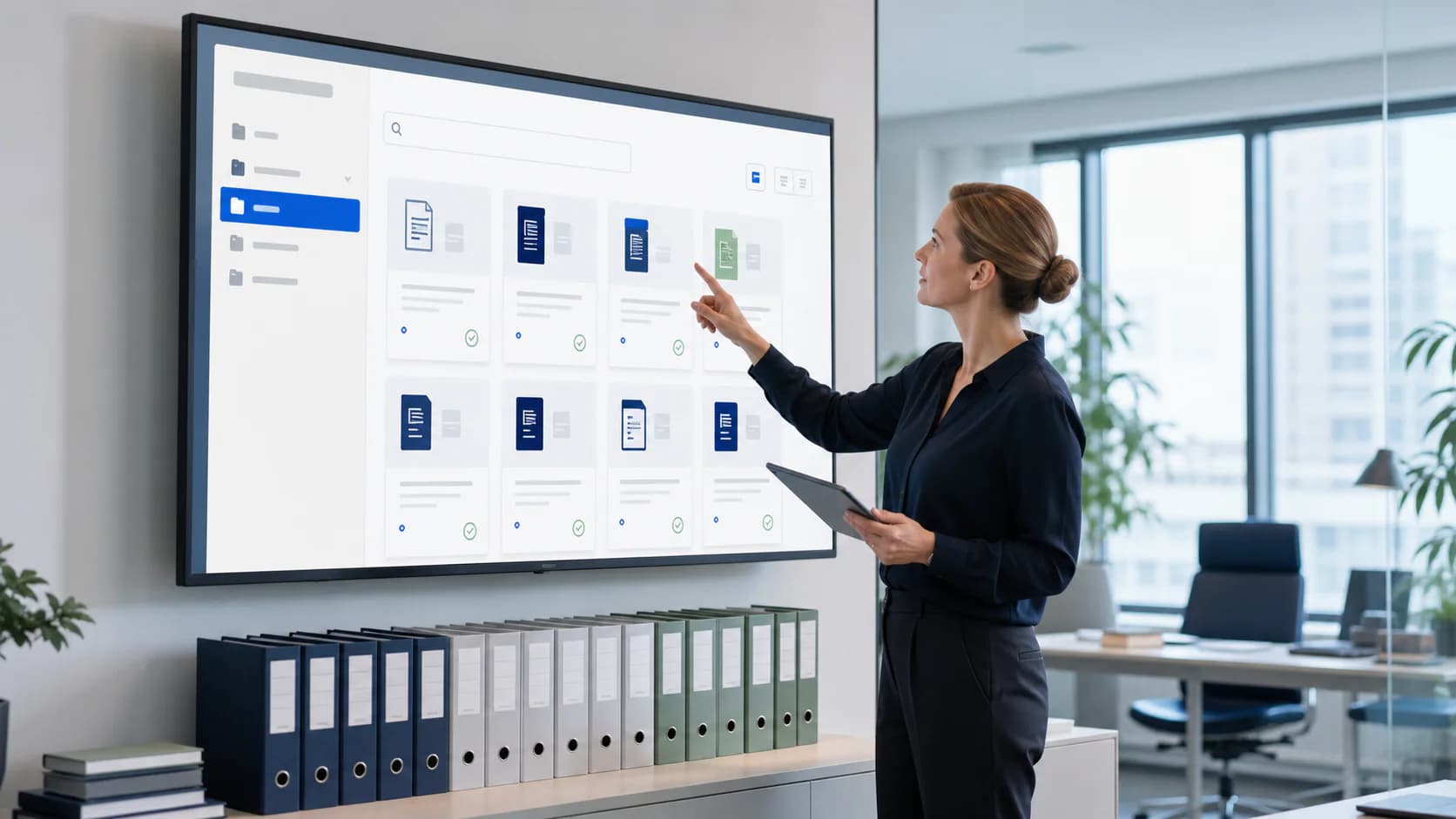
An AI support agent can only be as specific as the information it is allowed to use. A large folder does not automatically become a useful knowledge base. It may contain duplicate policies, old prices, internal-only notes, and documents written for people who already understand the company.
The objective is a controlled source of truth that can answer real customer questions and expose what it does not know.
Begin with questions, not files
List the questions customers actually ask. Group them by topic and consequence.
| Topic | Typical questions | Suitable source |
|---|---|---|
| Products | What does it do? Which model fits? | Product guide or approved catalog |
| Delivery | Where do you ship? How long does it take? | Current delivery policy |
| Returns | Can I return this? What is excluded? | Public returns policy |
| Accounts | How do I update details? | Public process plus human escalation rule |
| Pricing | What is included? Are discounts available? | Published pricing and commercial boundary |
| Security and privacy | How is data handled? | Privacy policy and trust documentation |
This exercise reveals which documents matter and which answers still live only in someone's memory.
Give every source an owner
Each important document needs:
- A clear title and purpose.
- An owner responsible for accuracy.
- A scope: public support, internal operations, or restricted.
- A review date or replacement process.
- A statement of what it does not authorize.
A delivery guide may explain standard timing but not authorize exceptional guarantees. A pricing page may describe plans but not let an AI negotiate a contract.
Knowledge tells the employee what is true. Approval rules tell it what it is allowed to do with that truth.
Write for retrieval
Retrieval works best when a source answers one coherent area with direct language. Long documents can still work, but important details should be easy to locate.
Weak entry
"Shipping depends on several factors. Contact us for more information."
Better entry
"Standard orders ship to the listed regions. Estimated timing begins after order confirmation. Custom products and exceptional quantities require an operations review before a date is promised."
The better entry identifies the standard answer and the exception boundary.
Separate public-safe and private knowledge
Not every company document should answer a website visitor.
| Knowledge class | Example | Where it may be used |
|---|---|---|
| Public-safe | Published product details, delivery regions, opening hours | Website support and public enquiries |
| Customer-context | Account-specific order or contract information | Authenticated or staff-reviewed workflows |
| Internal | Margin guidance, private procedures, employee notes | Internal preparation only |
| Restricted | Credentials, personal data, legal strategy | Never included in general model context |
Apply these boundaries during retrieval. A public support widget should search only the sources approved for that channel.
Build answer patterns, not scripts
Approved examples help establish tone and structure, but they should not become rigid macros. A useful example demonstrates:
- How the company acknowledges the question.
- Which facts it provides directly.
- How it explains an exception.
- When it invites a human handoff.
- What it never promises.
The agent can adapt that pattern to the visitor's wording while grounding factual details in the current source.
An illustrative knowledge-gap loop
A visitor asks whether a product is compatible with an uncommon system. The support agent finds the general product guide but no approved compatibility statement.
The right response is not to infer the answer. It should explain that the detail needs confirmation, preserve the question, and hand it to the appropriate person. The workspace then records a knowledge gap.
If the question recurs, the product owner can add a reviewed compatibility note. Future visitors receive a grounded answer from the new source.
| Step | Owner | Result |
|---|---|---|
| Question cannot be grounded | AI support agent | Clarification or human handoff |
| Gap is recorded | Support workspace | Repeated missing topic becomes visible |
| Answer is established | Product or policy owner | Approved source is added |
| Future retrieval | AI support agent | Consistent answer with source trace |
Review the knowledge base as an operation
Useful maintenance signals include:
- Sources that have not been reviewed by their owner.
- Different documents that answer the same question differently.
- Frequent escalations caused by missing information.
- Human corrections that repeat the same factual change.
- Questions answered from a source outside the intended channel scope.
Start with the twenty or thirty questions that create most routine support work. Test them, inspect the retrieved passages, and improve the sources before expanding.
Steadframe's Customer Service Agent answers from approved company knowledge, exposes uncertainty, and preserves human takeover. The wider customer support solution shows how that knowledge connects to confidence controls, sensitive-topic rules, and escalation.