AI Employees for Ecommerce: Five Practical Workflows
Five reviewable ecommerce workflows that improve customer and growth operations without letting AI make refund, payment, or account decisions.
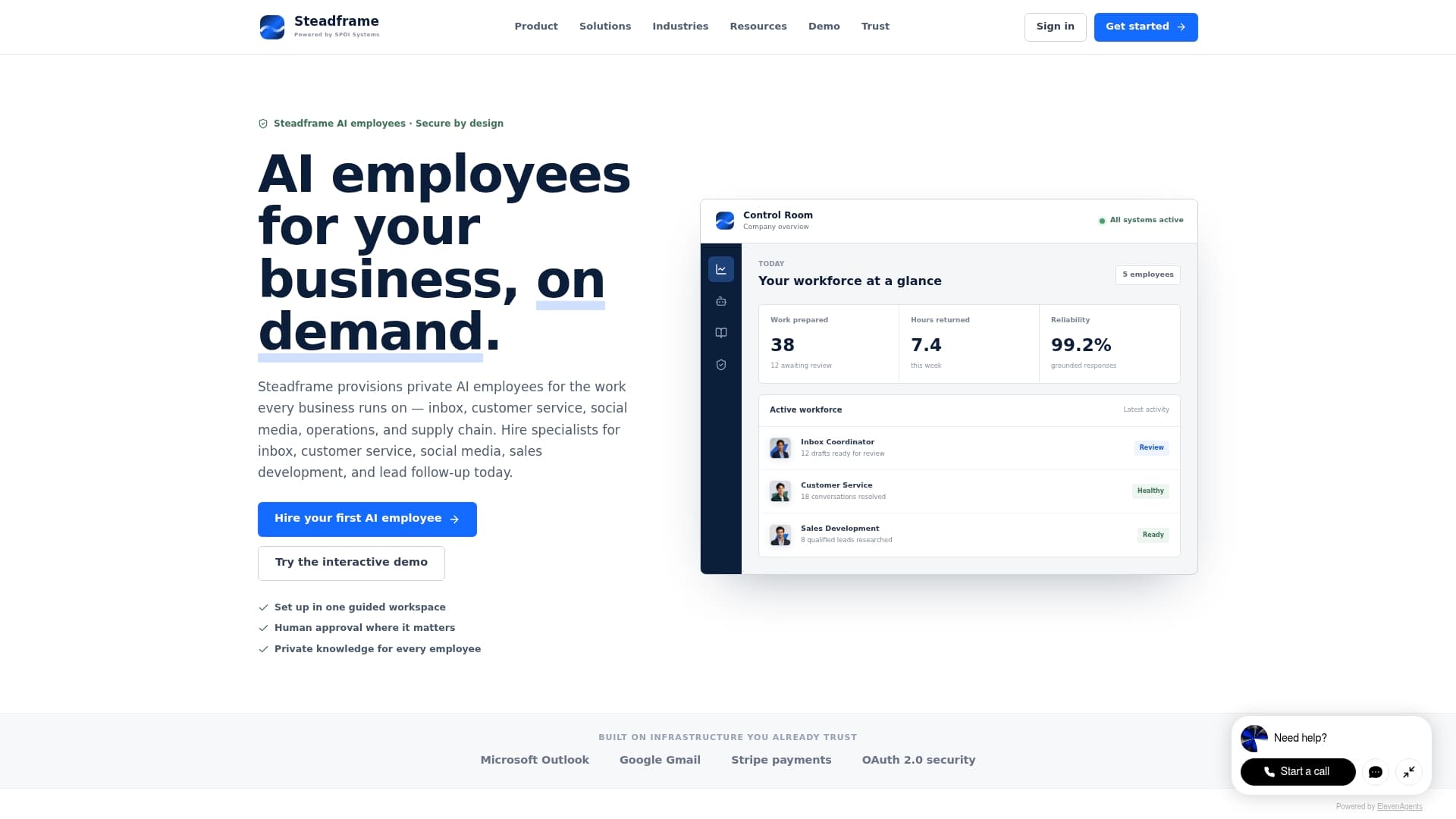
AI employees for ecommerce can take on repetitive preparation across the customer journey: inbox triage, website questions, social content, partnership research, and follow-up. The useful boundary is clear—AI handles documented coordination while people retain authority over refunds, payments, account security, and unusual promises.
Start with the bottleneck that creates the most waiting or repeated work.
1. Triage customer email
An Inbox Coordinator can classify:
- Order and delivery questions.
- Product information requests.
- Return and exchange enquiries.
- Account-access concerns.
- Wholesale or partnership messages.
- Automated notifications and noise.
For eligible questions, it retrieves current company information and prepares a draft. Sensitive payment, identity, legal, and exception requests route to the right owner.
The practical gain is not only faster writing. Important messages become visible sooner.
2. Answer public website questions
A Customer Service Agent can use public-safe knowledge such as:
- Product details and care instructions.
- Published delivery regions and timing.
- Return and warranty policy.
- Store or support hours.
- Basic order-process guidance.
It should not reveal customer-specific information in a public chat. Account status belongs in an authenticated process, and policy exceptions belong with an authorized person.
When the answer is missing, the system records the gap and supports human takeover with the conversation attached.
3. Maintain a social content workflow
Ecommerce content must connect brand, product facts, visual quality, seasonal timing, and inventory reality. A Social Media Manager can plan themes, prepare captions and images, route them for review, and publish approved content.
The team remains responsible for claims, promotions, availability, and any licensed assets. A calendar should leave room for real customer questions and product education instead of becoming a stream of offers.
4. Research wholesale and partnership opportunities
For brands growing beyond direct-to-consumer sales, an AI sales researcher can identify suitable retailers, distributors, creators, or complementary partners.
Define:
- Geography and company type.
- Product or audience fit.
- Required public evidence.
- Exclusions and conflicts.
- Relevant role.
- Approved outreach premise.
Every accepted account should retain its source and fit reason. A list of names with no evidence is not qualified research.
5. Keep approved conversations moving
Wholesale introductions, collaborations, high-value customer cases, and vendor conversations often pause while another response is expected.
A follow-up employee can watch the thread, wait for the approved interval, prepare a contextual reminder, and stop when the person replies, opts out, or books. It should not send a generic sequence across unrelated conversations.
Build one safe knowledge layer
| Source | Public chat | Social | Sales research | |
|---|---|---|---|---|
| Product catalogue | Yes | Public fields | Yes | Relevant summary |
| Return policy | Yes | Public version | Rarely | No |
| Customer record | Restricted | No | No | No |
| Brand guide | Tone only | Tone only | Yes | Outreach tone |
| Ideal partner profile | No | No | Campaign context | Yes |
Shared context does not mean universal access. Scope each role to what it needs.
Choose rollout metrics
For support, track correct answers, time to useful response, repeat contact, and escalation. For content, track approval effort, consistency, relevant engagement, and destination actions. For sales, track accepted research, positive replies, opt-outs, and qualified next steps.
Steadframe brings these specialist roles into one company workspace. Explore AI employees for ecommerce, or begin with the role attached to your clearest bottleneck: Elena for the inbox, Leon for website support, or Maya for social media.
Frequently asked questions
What should ecommerce automate first?
Choose a high-volume, well-documented workflow such as routine delivery questions or product-information email. Avoid starting with refunds or account security.
Can an AI employee access order information?
Only if the product supports the integration and the company grants appropriate access. Public chat should not expose account-specific data.
How is an AI employee different from an ecommerce chatbot?
A chatbot usually covers one conversation channel. An AI employee has a defined operational role that can include knowledge retrieval, drafting, routing, approval, and connected tools.